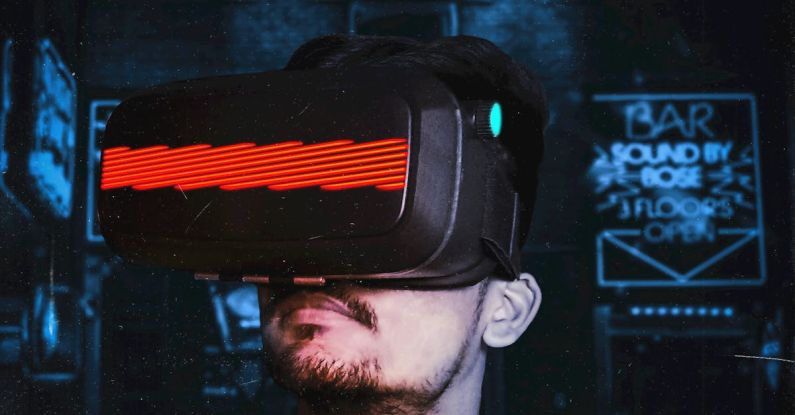
Augmented Reality: A Game-Changer in the Gaming Industry?
The gaming industry has always been at the forefront of technological advancements, constantly seeking ways to enhance the player experience and push boundaries. One such innovation that has been making waves in recent years is augmented reality (AR). Augmented reality offers a unique and immersive gaming experience by overlaying digital content onto the real world through the use of a device’s camera. This technology has the potential to revolutionize the way we play games and interact with our surroundings. In this article, we will explore how augmented reality is changing the gaming industry and what the future holds for this exciting technology.
Immersive Gameplay Experience
One of the key ways in which augmented reality is transforming the gaming industry is by providing players with a truly immersive gameplay experience. Unlike traditional video games that are confined to a screen, AR games blend the virtual world with the real world, allowing players to interact with digital objects and characters in their physical environment. This creates a sense of presence and realism that is unparalleled in traditional gaming.
Take, for example, the popular mobile game Pokémon GO, which took the world by storm upon its release in 2016. By using AR technology, players could see Pokémon characters superimposed onto the real world through their smartphone cameras. This innovative approach not only brought the beloved Pokémon franchise to life but also encouraged players to explore their surroundings in search of virtual creatures. The success of Pokémon GO demonstrated the immense potential of augmented reality in gaming and paved the way for future AR games.
Social Interaction and Community Building
Another aspect of augmented reality that is reshaping the gaming industry is its ability to facilitate social interaction and community building. Many AR games encourage players to collaborate with others in real-time to achieve common goals or compete against one another in virtual battles. This social element adds a new dimension to gaming, as players can connect with friends and strangers alike in shared virtual spaces.
Games like Ingress and Harry Potter: Wizards Unite have capitalized on this aspect of augmented reality, fostering vibrant communities of players who come together to explore the game world, strategize, and form alliances. By leveraging AR technology to create shared gaming experiences, developers are not only engaging players on a deeper level but also fostering a sense of camaraderie and belonging within the gaming community.
Physical Activity and Health Benefits
In addition to enhancing gameplay and social interaction, augmented reality games have the potential to promote physical activity and improve players’ health and well-being. Unlike traditional video games that often involve sedentary gameplay, many AR games require players to move around and explore their surroundings to progress in the game. This physical component not only makes gaming more active and dynamic but also encourages players to get outside, exercise, and engage in physical activity.
Games like Zombies, Run! and ARia’s Legacy are examples of augmented reality games that blend gameplay with physical exercise, challenging players to run, walk, or complete various physical tasks in the real world to advance in the game. By incentivizing physical activity through gameplay mechanics, these AR games are not only entertaining but also contribute to players’ overall health and fitness.
Future of Augmented Reality in Gaming
As augmented reality continues to evolve and become more sophisticated, the possibilities for its integration into the gaming industry are endless. With advancements in AR technology, we can expect to see even more immersive and interactive gaming experiences that blur the line between the virtual and real worlds. From augmented reality headsets to location-based AR games, the future of gaming is sure to be shaped by this transformative technology.
In conclusion, augmented reality is undeniably changing the gaming industry by offering immersive gameplay experiences, fostering social interaction and community building, and promoting physical activity and health benefits. As developers continue to explore the potential of AR technology in gaming, we can look forward to a future where the boundaries between the digital and physical worlds are further blurred, creating new and exciting possibilities for players worldwide. Augmented reality is indeed a game-changer in the gaming industry, and its impact is only just beginning to be realized.